What is biophilic design? At its simplest, it is the practice of bringing nature into the spaces where we live so our homes feel calmer, warmer, and more connected to life.
People will pay more for a room with an ocean view.
Many people will drive hours to sit beside a lake, book cabins in the mountains, and plan vacations around beaches, gardens, forests, cliffs, waterfalls, and wide-open skies. They will also spend more for a table near the window, a hotel room with a balcony, a house with mature trees, or a quiet corner that catches the afternoon light.
Why?

Inspiration from a mountain view with open sky, green landscape, distant peaks, and a nature-connected town
Not because nature is trendy.
Because nature makes us feel something.
A beach can make us feel open, calm, and unburdened. Meanwhile, a mountain view can make us feel grounded by something larger than ourselves. A forest can make us feel sheltered, while a garden can make us feel restored. Even a single shaft of warm sunlight across a room can change the way a space feels.
That feeling is at the heart of biophilic design.
What Is Biophilic Design?

Natural views feel valuable because they change the way a space, or a moment, makes us feel.
The word biophilic comes from two roots: bio, meaning life, and philia, meaning love, affection, or attraction. In plain language, biophilic means having an affinity for life and living things.
Biophilic design takes that idea and applies it to the spaces where we live, work, rest, and gather. Instead of treating nature as something separate from daily life, it brings natural elements into built environments so those spaces feel more connected to the natural world.
So, what is biophilic design in practical terms?
It can include plants, natural light, fresh air, water, organic shapes, natural materials, earthy colors, outdoor views, natural textures, and spaces that feel calm, layered, and alive.
However, the deeper point is not simply to make a room look “natural.” The point is to make a room feel more connected to life.
That is why biophilic design has become such an important idea in interior design, architecture, hospitality, wellness spaces, and home décor. It speaks to something people already understand, even if they have never heard the term before: some spaces make us feel better than others.
Why We Want Nature Around Us
Most of us spend much of our time indoors. We move from homes to cars to offices to stores and back again. Along the way, screens, artificial light, hard surfaces, straight lines, climate control, and constant noise shape much of modern life.
Convenience has its benefits. However, it can also leave a space feeling flat and disconnected.
Research on green spaces supports what many people already feel intuitively: time in nature can offer a break from overstimulation and has been linked with mental restoration, positive emotions, and other health benefits.
That is one reason biophilic design has become so appealing. It gives people a way to bring softness, warmth, depth, and a sense of nature back into everyday rooms.
A home with natural materials feels different from one filled only with plastic, glass, metal, and synthetic surfaces. Lighting filtered through real leaves feels different from a standard shade. Woven baskets, curved wooden tables, stone surfaces, wool textiles, and handmade objects all add something that perfectly smooth, mass-produced pieces often cannot.
Together, those details create texture, variation, and evidence of life.
Nature rarely looks perfect. Leaves have veins. Wood has grain. Stone has irregularity. Fibers twist. Colors shift. Handmade pieces carry the marks of the person who made them. As a result, these details give the eye somewhere to rest and the room something to say.
Biophilic design appeals to people because it brings that sense of life indoors.
In other words, it is not just about beauty. It is about atmosphere.

Our desire to connect with nature is not abstract. We seek out shade, greenery, open paths, and places that make us feel calmer and more present.
Why Natural Views Feel Premium
There is a reason oceanfront rooms cost more.
Mountain cabins are marketed as escapes for the same reason. Resorts often frame their value around views, gardens, courtyards, pools, balconies, terraces, and outdoor living. In the same way, restaurants and hotels use natural stone, wood, plants, water features, and warm lighting to make a space feel elevated.
Nature creates emotional value.
A beach is not premium because of sand alone. It is premium because of what it does to us. The sound of water, the openness of the horizon, the warmth of sunlight, the movement of air, and the rhythm of waves all work together to create a feeling.
Mountains create something different: scale, quiet, strength, and awe. Forests offer shelter, privacy, shade, and stillness. Gardens suggest intimacy and care. Sunlight brings warmth and energy. Firelight creates comfort and gathering.
Biophilic design takes those emotional cues and brings them into built spaces.
The idea is not always about copying nature literally. More often, it borrows what nature does well: light, movement, texture, pattern, curve, shadow, color, and material honesty.
That is why the idea has moved far beyond “add more plants.”
Plants can be part of biophilic design, but they are not the whole story. For example, a room can be full of plants and still feel harsh if the lighting is cold, the materials feel synthetic, and the space lacks warmth. On the other hand, natural wood, soft filtered light, organic shapes, woven texture, and earthy color can make a room feel connected to nature without turning it into a greenhouse.
The goal is not to decorate with nature as a theme. Instead, the goal is to create a space that feels more human.
Where Biophilic Design Came From
Although the phrase feels current, the instinct behind biophilic design is old.
Long before the term existed, people designed homes and gathering spaces around sunlight, shade, water, gardens, courtyards, natural ventilation, and local materials. Traditional architecture often responded directly to the surrounding landscape. Homes were built to catch breezes, avoid harsh sun, use local stone or wood, and create protected outdoor spaces.
The modern language came later.
The question “what is biophilic design?” starts with a related idea: biophilia. The biophilia hypothesis is commonly described as the idea that humans have an innate tendency to seek connection with nature and other forms of life. The term was used by Erich Fromm in the 1970s and later popularized by biologist Edward O. Wilson in his 1984 book Biophilia.
Biophilic design grew from that larger idea.
It asks a practical question:
If people are naturally drawn to nature, why do so many buildings and interiors ignore it?
For a long time, modern design often leaned toward efficiency, sharpness, and control. Clean lines, sealed buildings, artificial lighting, synthetic materials, and neutral surfaces became common. Some of that brought real benefits. Even so, many spaces started to feel disconnected from the natural world.
Biophilic design is a response to that.
It does not reject modern life. It softens it.
A home can still be functional, polished, and contemporary while also feeling warm, textured, organic, and alive.
Is Biophilic Design a Current Trend?
Yes, biophilic design is having a moment. However, calling it only a trend misses the point.
So, what is biophilic design today: a passing style, a design philosophy, or both?
The honest answer is both. Designers, architects, hotels, wellness spaces, workplaces, and home décor brands are talking about it more than they did twenty years ago. The phrase feels current, especially as people look for homes that feel calmer, warmer, healthier, and more personal.
The rise makes sense.
People are spending more time indoors. Many are more aware of how their homes affect their mood. They are also tired of spaces that feel overly gray, sterile, disposable, or mass-produced. At the same time, organic modern style, sustainability, handmade décor, wellness interiors, and natural materials have all become more visible.

The Patio de la Acequia in the Generalife at the Alhambra in Granada, Spain, shows how gardens, water, shade, architecture, and natural materials were used together centuries before the term biophilic design existed.
Biophilic design sits at the center of those shifts.
Still, the desire behind it is not new.
People have always wanted sunlight, shade, gardens, fresh air, natural texture, and beautiful views. They have always responded to the sound of water, the warmth of fire, the shelter of trees, and the openness of the sky.
What is new is the name, the research, and the way the design world now talks about it.
Terrapin Bright Green’s 14 Patterns of Biophilic Design helped organize the idea into practical design patterns, including natural light, material connection with nature, biomorphic forms, refuge, mystery, and visual connection with nature.
The trend is current.
The instinct is ancient.
That distinction matters because it keeps biophilic design from feeling like a passing style. A color trend may come and go. A furniture shape may be popular for a few years and then feel dated. By contrast, the desire to feel connected to nature is harder to dismiss.
People may change how they express it, but they are unlikely to stop wanting homes that feel warm, calm, grounded, and alive.
What Biophilic Design Looks Like at Home
When someone asks what is biophilic design for the home, the answer does not have to be complicated.
Start with light. Warm, layered lighting can make a room feel softer than overhead lighting alone.

Biophilic design at home can begin with warm light, natural materials, and one piece that makes the room feel more alive.
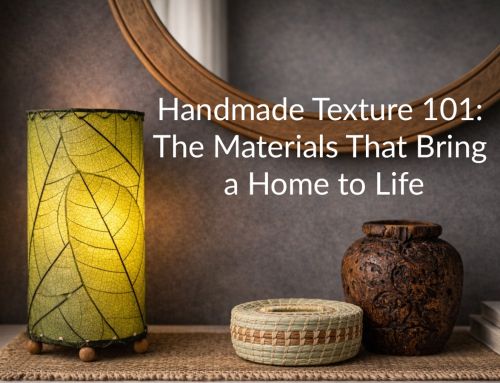
Natural materials also matter. Wood, bamboo, rattan, wool, stone, leaves, jute, cotton, clay, and woven fibers bring texture and visual depth into a space.
Organic shapes help too. Curved, flowing, or irregular forms often feel more natural than rigid lines repeated everywhere.

Organic shapes, warm light, and natural materials can make a simple room feel more connected to nature.
Color plays a role as well. Greens, warm browns, soft neutrals, amber tones, clay, cream, charcoal, muted blues, and sun-washed shades all come from palettes we already associate with the natural world.
Texture may be one of the easiest places to begin. Baskets, lamps, textiles, wall art, planters, and handmade pieces can shift the feeling of a room without requiring a remodel.
Refuge is another part of the idea. A reading corner, softly lit bedroom, breakfast table near a window, or welcoming entryway can all make a home feel more grounded.
The goal is not to make every room look like a forest.
Instead, the goal is to make the room feel less sterile and more alive.
This is where biophilic design becomes practical. It is not reserved for luxury hotels, architecture firms, or homes with sweeping mountain views. It can happen in everyday rooms through the choices we make about light, texture, material, color, and form.
A single piece can shift the feeling of a space when it brings natural character into the room.
Natural Materials Make a Room Feel Alive
Natural materials have a presence that synthetic materials often struggle to imitate.
Wood grain, woven fibers, leaf texture, bamboo, stone, wool, rattan, and handmade paper all carry visual depth. They are not perfectly uniform. Because they change slightly from piece to piece, they reveal where they came from.

Natural materials bring texture, variation, and visible character into a room.
That variation is part of the appeal.
A mass-produced object can be beautiful, but it often feels identical by design. A handmade object made from natural materials carries more visible character. It reminds us that someone shaped it, stitched it, carved it, wove it, or assembled it.
In a biophilic home, those details matter.
They help a room feel collected rather than manufactured. They also add warmth without needing clutter. Most importantly, they bring nature into the space without relying only on plants or floral patterns.
This is why a natural-fiber basket, a handmade lamp, or a textured wall piece can shift the feeling of a room. These pieces do not just fill space. They give the space a pulse.
As a result, the room feels more considered, more lived in, and closer to the natural world.
Light Changes the Mood of a Nature-Inspired Home
For Eangee Home Design, the answer to what is biophilic design often begins with light.
Lighting may be one of the most powerful parts of biophilic design because light changes everything around it.
Natural light shifts throughout the day. It moves, warms, fades, and creates shadow. Morning light feels different from afternoon light. A bright summer room feels different from a softly lit winter evening. That movement gives a room rhythm.
Artificial lighting can support that same feeling when it is warm, layered, and softened through natural materials.
This is where handcrafted lighting has a unique role.
A lamp made from real leaves does more than illuminate a room. It changes the quality of the light. The glow passes through the natural material, revealing texture, color, and pattern. Instead of glare, it creates warmth. It turns the lamp into both a functional object and a quiet connection to nature.

When light passes through real leaves, the material becomes part of the atmosphere of the room.
That is very different from lighting that simply turns on and off.
Biophilic lighting is not only about brightness. It is about mood, atmosphere, and the way a room feels once the sun goes down.
A softly glowing lamp can create a sense of refuge. Meanwhile, a pendant light made with natural materials can make a dining space feel warmer and more gathered. A sculptural floor lamp can bring height, shape, and organic presence to a room that otherwise feels flat.
Light is not just practical.
It is emotional.
Why Biophilic Design Works
What is biophilic design, really?
It is a way of designing spaces around a feeling humans keep returning to: the need to feel connected to the natural world.
The most important thing to understand is that people are not really chasing a look.
They are chasing a feeling.
A room should help people exhale when they walk in. A home should feel less like a storage unit for furniture and more like a place that supports daily life. After a long day, people want warmth, beauty that does not feel forced, and objects that carry some sense of material, craft, and care.
That is why natural spaces feel premium.
Not because they are decorative, but because they give us something we are often missing: openness, calm, shelter, wonder, warmth, and connection.

The strongest biophilic spaces feel calm, warm, and livable because light, texture, plants, and natural materials work together.
Biophilic design brings those qualities into the home.
It reminds us that a beautiful room is not only about how it photographs. It is about how it feels to live in.
And when a space includes natural materials, warm light, organic form, and handmade texture, it becomes more than styled.
It becomes felt.



Curated inspiration, delivered.
Sign up for our newsletter and be the first to know about new arrivals, styling ideas, and special offers.